
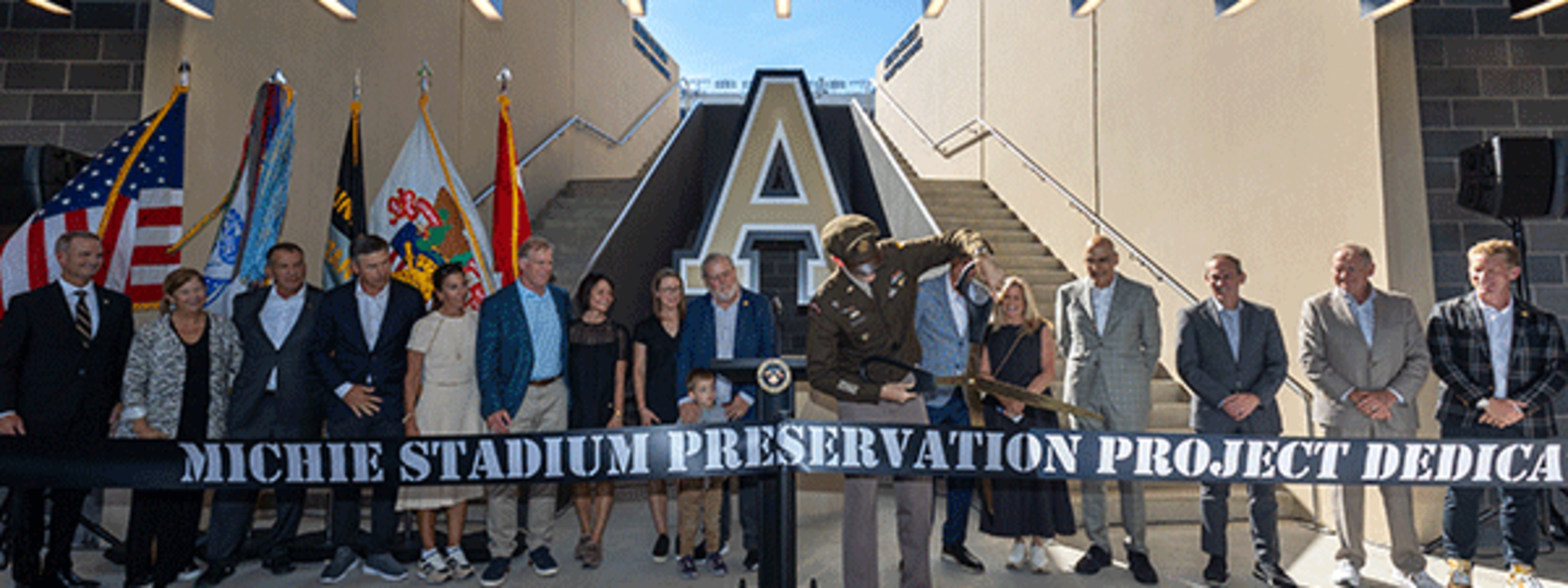
Michie Stadium Preservation Project Dedication Ceremony Marks Reopening of the East Stands
By Leigh Gust, WPAOG Development Communications Manager
On Friday, September 4th, West Point celebrated the dedication and ribbon-cutting of the Michie Stadium Preservation Project, marking a transformational moment for one of the Academy’s most important and iconic landmarks.
The day was a spectacular kickoff to Army’s home opener for the 2026 football season, held the following day. The ceremony brought together Academy leaders, members of the Long Gray Line, project supporters and community partners, including Congressman Pat Ryan ’04; Army West Point Athletic Director Tom “Theo” Theodorakis; Chairman of the Army West Point Athletic Association (AWPAA), Corky Messner ’79; the 62nd Superintendent of the United States Military Academy, Lieutenant General Jay Bartholomees ’95; and WPAOG Board Chairman, West Point Ready Campaign Chair, and 2017 Distinguished Graduate, the Honorable Bob McDonald ’75. Also in attendance were three former superintendents who helped advance the project: Lieutenant General (R) Robert L. Caslen ’75; General (R) Darryl A. Williams ’83; and Lieutenant General (R) Steven W. Gilland ’90.
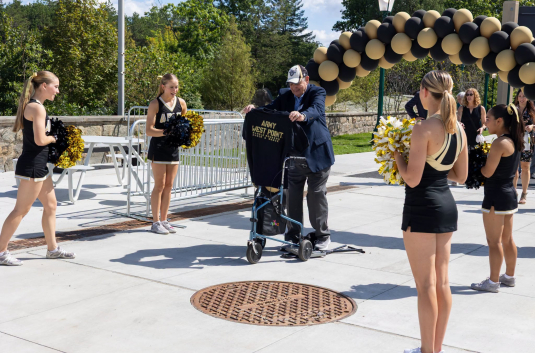
Representative Ryan presented a Congressional Record to the superintendent and athletic director recognizing the dedication and ribbon-cutting of the Michie Stadium Preservation Project.
WPAOG President and CEO Mark Bieger ’91 gave opening remarks, sharing, “Whether you stood in these stands as a cadet; competed on this field as an attacker or defender on one of our two nationally ranked lacrosse teams; a linebacker, defensive end, center, fullback or quarterback on the Army Football Team; coached from the sidelines; or returned as a proud graduate, we are all shaped by Michie Stadium. This venue is one of the enduring links that connects every generation of the Long Gray Line.”
Theodorakis reflected on the famous words of GEN Douglas MacArthur and GEN George Marshall, tying together MacArthur’s “fields of friendly strife” with Marshall’s “I want a West Point football player.” He said, “These two statements are why this place matters. MacArthur understood the value of preparation, competition, and the character forged through sport, while Marshall understood the kind of leader that experience could produce. That is what we can count on here. The strongest structure of this new facility is not the concrete and steel. It is what is inside: the Long Gray Line, the West Point community, our fans and, most importantly, our cadets.”
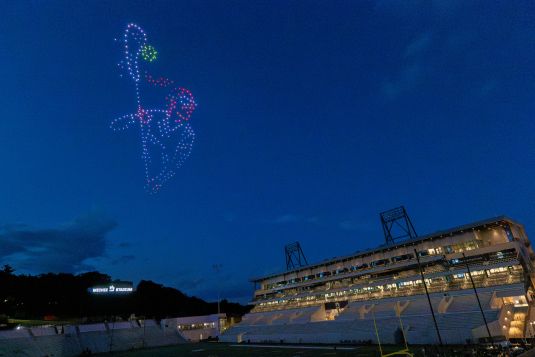
The evening concluded with a tour of the new East Stands, a cocktail reception in the brand-new Healy Club area, a dinner hosted in the south end zone, a flyover, and a celebratory drone show over Michie Stadium.

A Legacy Preserved
As the No. 1 priority of the West Point Ready Campaign and a top facilities priority under three Superintendents, the Michie Stadium Preservation Project represents years of vision, determination and commitment to the future of West Point.
For generations, Michie has been a place where the West Point experience comes to life. The new East Stands help secure a future in which cadets will continue to pursue excellence in a place that inspires achievement, builds a winning culture, and serves as a gathering place for the Army West Point community and fans.
Michie Stadium is one of West Point’s most important public portals, offering the American public a window into the grit, tenacity, discipline, and values of the Corps of Cadets through one of America’s most cherished sports. Thus, it is a landmark worthy of intentional preservation.
The generosity of the Long Gray Line, combined with WPAOG’s partnership with AWPAA and the Academy, helped make this historic project possible. Cornerstone donors include Lee Anderson ’61, Bill Foley ’67, Vinnie Viola ’77, Doug Black ’86, Tony Guzzi ’86, Rob Healy ’86, Bob Eisiminger ’88, Anthony Noto ’91, and the Association of Graduates.
A New Era for the East Stands
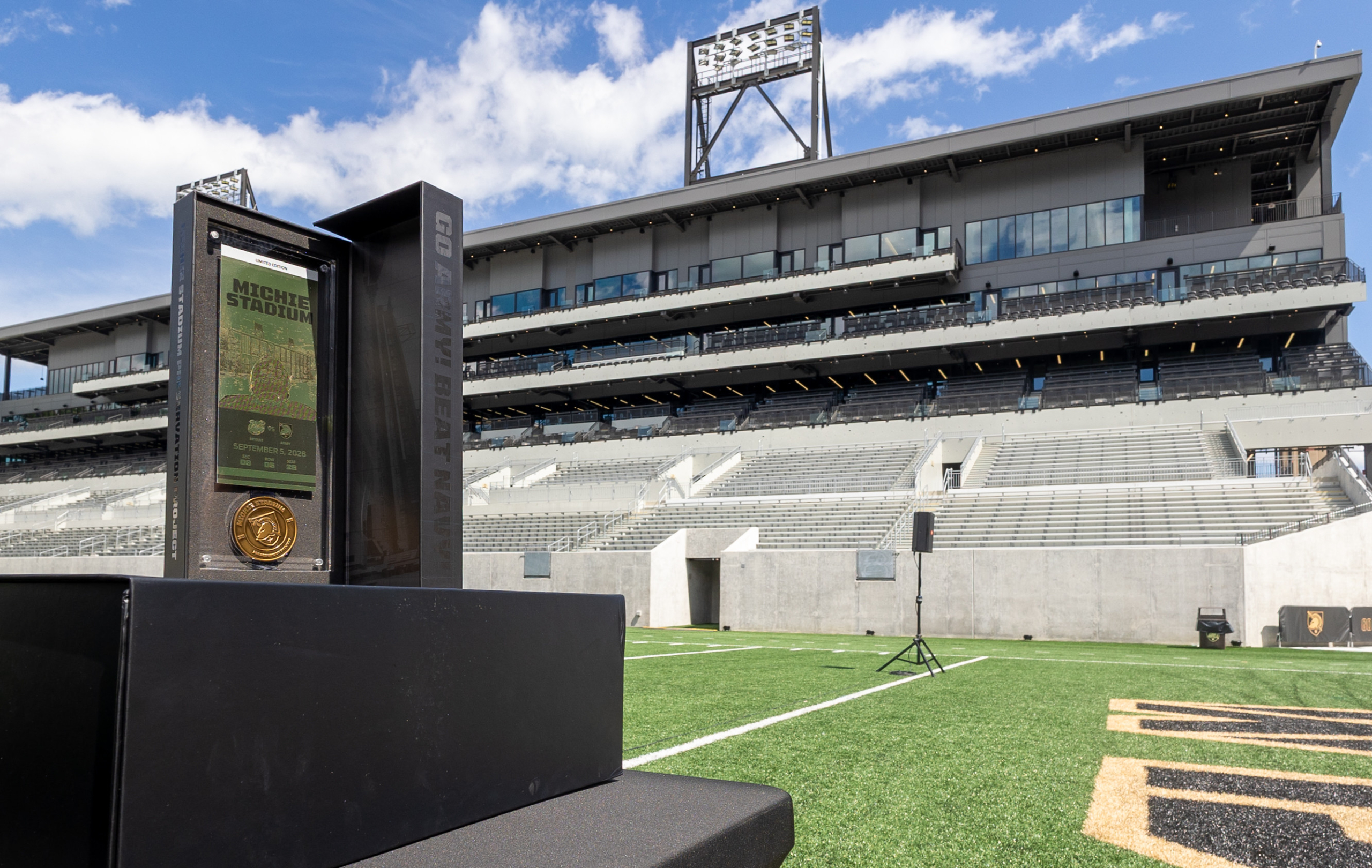
The original East Stands, built in 1962, were in disrepair and lacked key features that modern fans expect. The reconfigured 138,000-square-foot facility features a state-of-the-art design that showcases West Point excellence while retaining the architectural character of the Academy and remaining true to its historic setting. The structure also capitalizes on panoramic views of Lusk Reservoir, the Cadet Chapel, Fort Putnam, and the Hudson River.
The new building systems and operations have been fully overhauled, including broadcasting, ticketing, lighting, winterization, and accessibility. The Athletics Hall of Fame will be relocated to the first level, and the road between the reservoir and facility has been developed into a pedestrian-only area, allowing for greater access to the water’s edge, bringing two iconic West Point areas together and creating Victory Plaza, which will celebrate the life achievements of notable West Point graduates.
The concessions revenue generated from athletic contests at Michie Stadium provides critical funding for cadet activities and will benefit more than 100 cadet clubs. In addition, the Corps of Cadets seating section will stretch end zone to end zone, ensuring that the cadets are a central focus and amplifying their game day support for the cadet-athletes on the field.
A Partnership for the Future
The preservation of Michie Stadium extends beyond the physical transformation of the East Stands. It also represents a commitment to sustaining Army Athletics for generations to come. Most recently, AWPAA and USAA have expanded their partnership, which is rooted in shared values and service. USAA has been an ally for cadet-athletes and the Long Gray Line since its inception. Now both institutions, founded by U.S. Army officers, will partner to preserve one of college football’s most storied venues.
Michie Stadium Preserved by USAA will look to keep everything that makes Army different in this landscape of college athletics; moreover, the partnership with USAA will ensure that Army West Point will be able to make additions that enhance the legacy of this century-old stadium and strengthen the long-term sustainability of Army Athletics. The agreement directly supports more than 1,400 cadet-athletes and will permanently preserve the tradition of Army Athletics while positioning it for long-term success in a rapidly evolving collegiate athletics landscape.
The reopening of the East Stands was a celebration of what can be accomplished when the West Point community comes together around a shared vision. From the graduates and supporters who invested in the project to the cadets who will experience it firsthand, the evening reflected the lasting impact of that commitment. Now, Michie Stadium is ready for a new generation of moments, traditions, and memories that make Army football unlike any other.
The post Michie Stadium Preservation Project Dedication Ceremony Marks Reopening of the East Stands appeared first on West Point Association of Graduates.